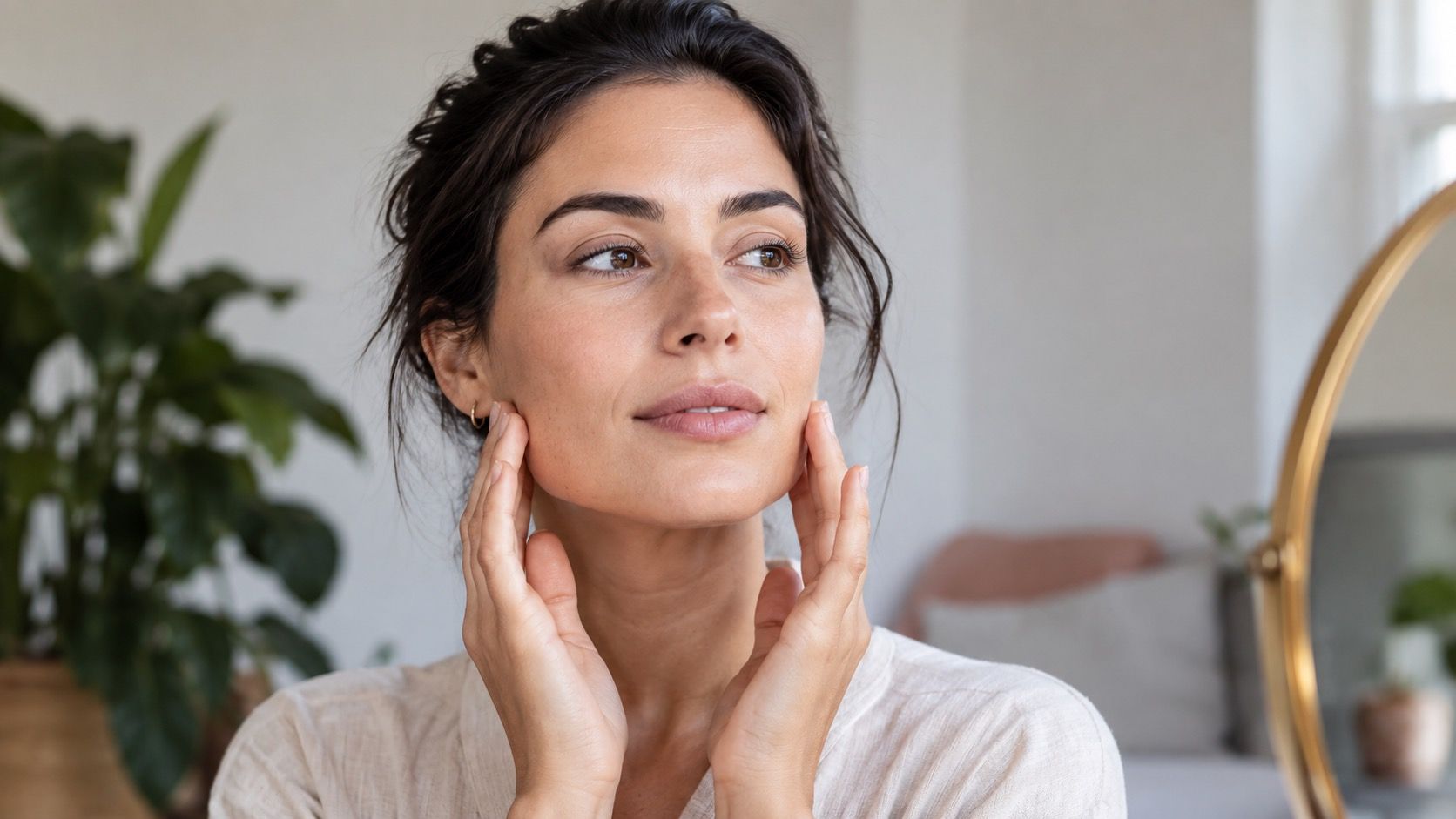
Most face-shape mistakes come from trying to get a fast, certain answer from an unreliable view. A face shape is simply a pattern of proportions, not a verdict about how you should look. With an ordinary photo, a relaxed mirror check, and a little patience, you can see enough to make better choices about hair, glasses, makeup, or facial hair. The aim is to notice what repeats, not to force yourself into a category that never quite fits.
1. Choosing a shape from one feature
A strong jaw does not automatically mean a square face, and full cheeks do not automatically make a face round. The forehead, cheekbones, jaw, and length all need to be considered together. Someone can have a soft jaw with a long oval outline, or broad cheekbones with a narrow chin. When one feature gets all the attention, it can drown out the proportions that actually define the overall shape.
Instead, start by asking which area is widest. Then check whether the face keeps a similar width from forehead to jaw or narrows toward the chin. Finally, compare length with width. Write down two or three observations before naming a shape. “Cheekbones are widest, jaw tapers, and length is moderate” is a better starting point than a quick label based on one selfie.
2. Measuring points that are not comparable
Measurements can be useful, but only when they are consistent. People often measure the forehead too high, the jaw too close to the chin, or the cheeks at different heights on each side. That creates numbers that look precise but do not describe the face. Hair can also hide the true hairline, while facial hair can make the jaw look wider than it is. Do not treat a measuring tape as more trustworthy than a clear visual comparison.
If you want to measure, pull hair back and use the same landmarks on both sides. Measure the forehead near the temples, the cheekbones across their broadest point, and the jaw from corner to corner, not around its curve. Repeat once rather than measuring until you get the answer you prefer. If the numbers are close, that usually means your face has blended features, not that you made a mistake.
3. Trusting a close-up selfie
A close phone camera can distort the face dramatically. When the lens is near your nose, the center of the face appears larger while the temples and jaw seem to recede. A low camera can make the lower face look heavier; a high camera can make the eyes and forehead look dominant. Beauty filters, portrait mode, and aggressive sharpening add another layer of uncertainty. It is easy to compare two selfies taken years apart and mistake different camera setups for a real change in face shape.
Take a second photo from farther away, at eye level, in even daylight. Use a small amount of zoom if your phone allows it, and keep your expression neutral. Compare that image with what you see in the mirror. You do not need a studio portrait, just a view that does not exaggerate one part of the face. One reliable photo is more valuable than ten posed close-ups.
4. Ignoring the hairline and hairstyle
Hair is part of the visible frame, but it is not the same thing as the face. Heavy bangs can hide a wide forehead, curls can add width at the temples, and a deep side part can make one side seem larger than the other. A receding or uneven hairline can also change the way the upper face reads. If you identify your face shape with all of that in place, you may be measuring the haircut rather than the underlying proportion.
Move hair away from the face for the initial check, then bring it back when you are choosing a style. That order matters. First identify the basic outline; then decide whether you want your haircut to add height, width, softness, or definition. This keeps a temporary hairstyle from becoming a permanent conclusion about your features.
5. Treating mixed features as a failure
Many people expect a face to match one diagram exactly. Real faces rarely do. You may have an oval length, a heart-like forehead, and a jaw that becomes more angular when you smile. Those overlaps are normal, and they often explain why different apps or friends give different answers. A label is only a shorthand. It should help you choose a direction, not make you feel that your face is somehow difficult to classify.
Use the two features that are most consistent across normal views. Maybe your cheekbones are always broadest, or maybe your face is always longer than it is wide. Those observations can guide a haircut or frame choice without demanding a perfect category. If two labels both fit, keep both in mind and test styles rather than arguing with the mirror.
6. Following style rules too literally
Face-shape charts can offer ideas, but they cannot see your hair texture, glasses prescription, beard growth, personal taste, or daily routine. A rule that says a certain frame is “wrong” for a round face may ignore the fact that the frame fits beautifully, matches your brows, and feels like you. The same is true for haircuts. A long face can wear height, and a square face can wear a sharp fade, if the overall style is intentional.
Use advice as a way to create contrast or balance, not as a ban list. Try one change at a time and take a few photos in normal conditions. Notice whether you like the result after a week, not just under salon lighting. Comfort, maintenance, and confidence are practical criteria, and they deserve as much weight as a diagram.
7. Forgetting that expression and time matter
Your face is not static. Smiling lifts the cheeks, clenching the jaw changes the lower third, and tiredness or hydration can affect puffiness. Weight changes, aging, shaving, and new glasses can all alter the visible balance without replacing your underlying structure. Comparing a relaxed recent photo with an old event photo, taken in different light and with a different expression, is an easy way to invent a dramatic change that is not really there.
When you reassess your face shape, use a neutral expression and similar conditions. Give a new haircut or beard time to settle before deciding how it changes your appearance. The most useful answer is not “Which box am I in forever?” It is “What proportions do I see today, and what style choices do I want to try?” That question stays helpful as your look evolves.