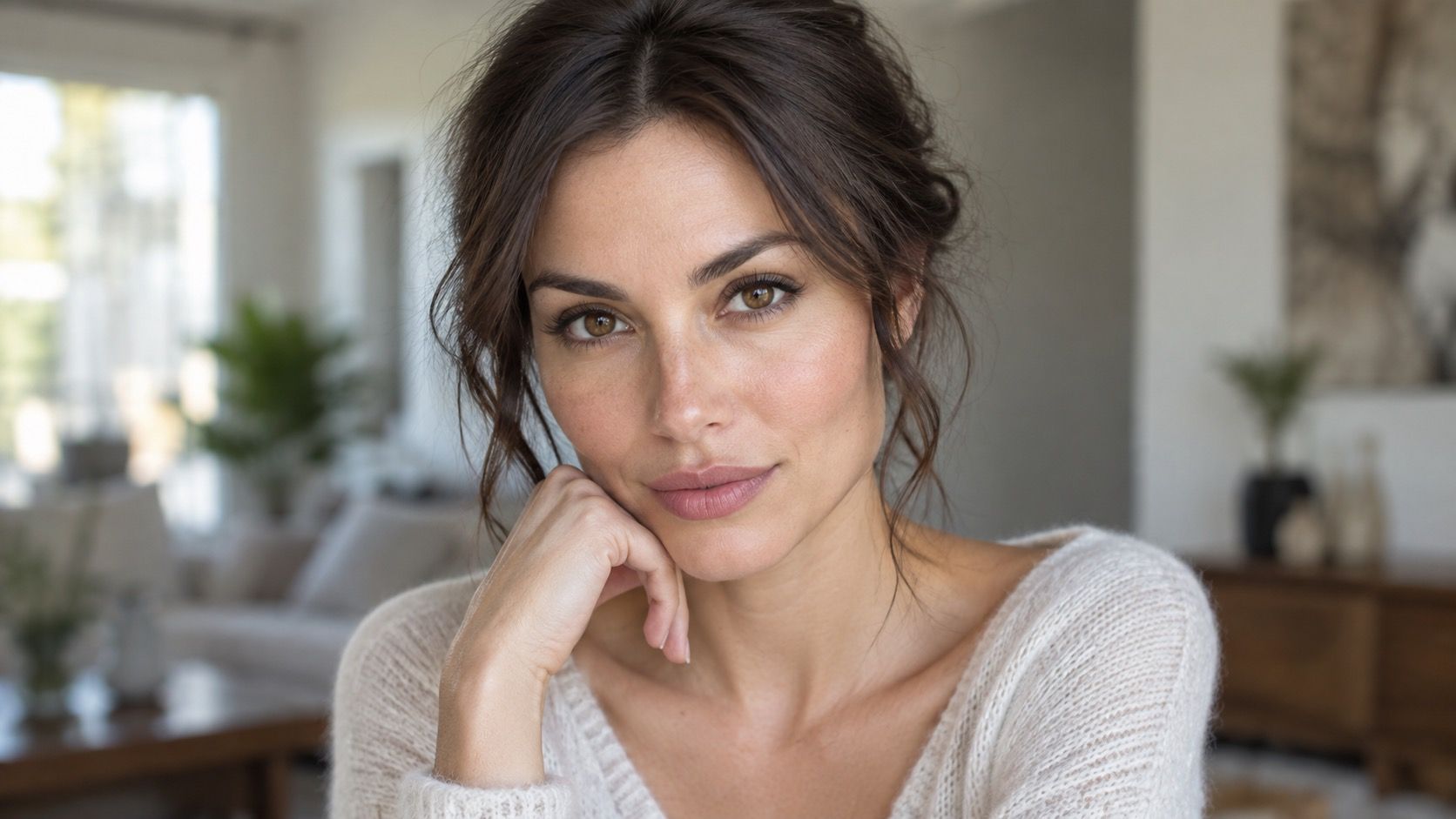
An oblong face is longer than it is wide, with the forehead, cheekbones, and jaw often fairly similar in width. The word can sound more rigid than the face itself. Some oblong faces have a softly rounded jaw, others have a more defined one, and many overlap with oval or rectangle proportions. What matters is the overall vertical line: the face keeps a relatively even width as it travels from the forehead to the jaw, rather than widening strongly through the cheeks or temples.
What makes a face oblong
Length is the main feature, but it is not the only one. An oblong face usually has a longer midface or a longer overall distance from hairline to chin, while the forehead, cheekbones, and jaw do not differ dramatically in width. The sides may look straight or gently curved. The chin can be rounded, square, or tapered, so chin shape alone does not decide the label.
Oblong and long face are commonly used for the same general idea. Rectangle is a nearby description that often suggests a more angular jaw and straighter sides. Oval faces are also longer than wide, but they tend to narrow more visibly at the jaw and may have a little more curve through the outline. These are helpful comparisons, not categories with hard borders.
Check length and width in a reliable way
Use a mirror or a simple photo taken with the camera at eye level. Pull your hair away from your face if it covers the temples or jaw, but do not pull it so tightly that it changes the look of your forehead. Keep your head level and your expression neutral. A chin raised toward the camera can shorten the face, while a camera below eye level can make it look longer.
First compare the total face length with the widest horizontal area. Then look at the three main widths: forehead, cheekbones, and jaw. An oblong face usually looks vertically longer without having one dramatic widest point. You can measure with a flexible tape if you enjoy numbers, but a second look in different lighting is often more useful. The answer should make sense in an ordinary photo, not only in one carefully posed view.
Oblong, oval, and rectangle compared
Oval and oblong are often the hardest pair to separate. Both have more length than width. An oval face usually has a gentle taper: the forehead is a bit wider than the jaw, the cheeks are softly curved, and the chin rounds off the outline. An oblong face stays more even through the sides, so the vertical length is what you notice first. The difference can be subtle, and it does not need to be settled perfectly before you choose a haircut.
Rectangle proportions usually add angles. The forehead, cheeks, and jaw may have similar width, but the jawline looks more squared off and the sides read straighter. Someone can have an oblong face with a square jaw or an oval face with a long midface. Describe the parts you see rather than arguing with a face chart about the exact name.
Haircuts that add horizontal balance
If you want your hairstyle to create more width, look for volume around the sides instead of a lot of height at the crown. Waves, curls, a textured bob, or layers that open around the cheeks can broaden the visual frame. A fringe can shorten the visible forehead area, especially if it is airy or parted rather than cut as a heavy line. Side volume does not have to mean big hair; even a little movement away from the face changes the outline.
Long hair can work beautifully on an oblong face. The placement of the layers makes the difference. Long, flat hair with extra height on top emphasizes the vertical line, while waves or face-framing layers around the cheek and jaw area introduce width. If you wear a center part, try styling a little fullness at the sides before deciding it is not for you. Hair density and texture matter more than any generic rule.
Glasses, earrings, and necklines
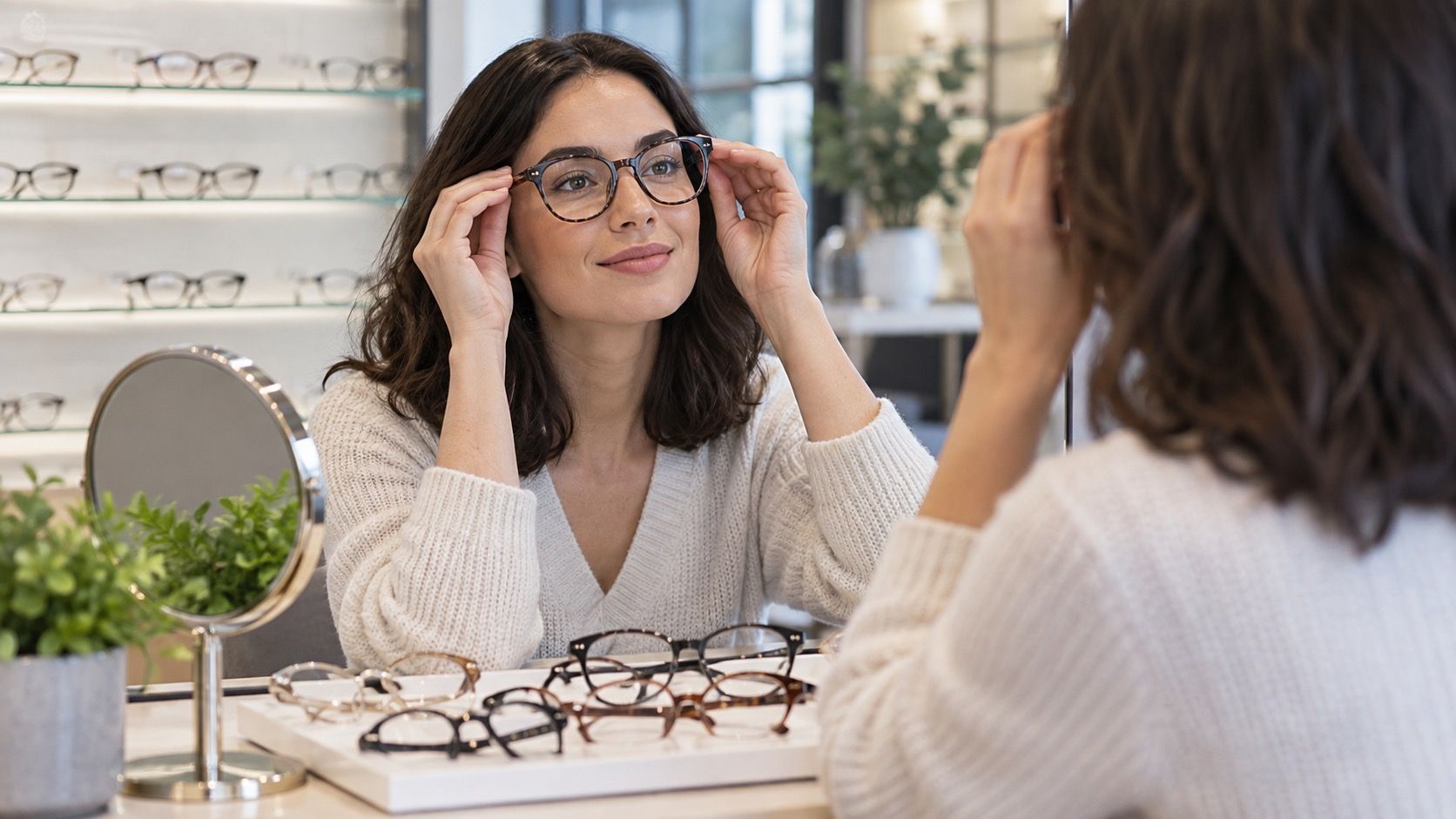
Frames with noticeable lens depth or some visual width can interrupt a long vertical line. Round, softly squared, or wider styles are often good pairs to try first. A shallow, narrow frame can make the face seem longer, but that may be exactly the clean, graphic effect you like. Do not buy from a face-shape filter alone. The bridge, prescription, and placement of the top rim can change the result more than the frame category.
Earrings and necklines create lines too. Wider hoops, clustered studs, or earrings with some horizontal spread can bring attention outward. Shorter necklaces and higher or wider necklines can feel different from a deep V-neck, which continues the vertical line. These are design choices, not corrections. A long drop earring can look elegant on an oblong face precisely because it echoes the length.
Makeup placement that feels balanced
There is no need to contour a face into another shape. If you like sculpting, a soft shadow near the hairline and under the chin can make the face look a touch shorter in photographs. Blush placed more horizontally across the cheeks, rather than swept high toward the temples, can add a wider impression. Keep the blend soft so the color looks like skin and not a map of your bone structure.
Use lighting as your final check. Strong overhead light can make a long face look more angular, while daylight usually softens it. Try the placement at home, then look in a window or take a normal phone photo. The version that feels like you is the useful one. A face-shape diagram should never have more authority than your own reflection.
Work with the face you have
Oblong is a description of proportion, not a problem to solve. Your features may include a longer midface, a straight jawline, or a broad forehead, and each one can be part of the look you enjoy. Keep the notes that help when you are choosing between two styles, then drop the rest. You do not need to balance every feature every day.
Hair, glasses, facial expression, and even the angle of a photo change how length reads. If your shape looks oval one day and more rectangular the next, that is normal. Use the label as a practical shortcut when it helps, and let your personal style decide what happens after that.