A square face shape is usually recognized by its structure: the forehead, cheekbones, and jaw can appear close in width, while the jawline has more definition than a rounded or oval face. The outline may look broad and balanced from top to bottom, with a chin that is subtle rather than pointed. It is best understood as a pattern of proportions and angles, not as a label that limits your hair, glasses, or makeup choices.
What gives a face a square outline
The classic square face has a strong horizontal feeling. The sides of the forehead and jaw sit in a similar visual range, and the jaw may have a noticeable corner where it meets the chin. The face is often close in length and width, although some square faces are a little longer than wide. The key difference is the structure around the lower face, not an exact measurement.
A square jaw does not have to look severe. It can be softly defined, and the rest of the face may be quite gentle. Likewise, prominent cheekbones do not automatically make a face square. Look at the full perimeter from hairline to jaw. If the forehead and jaw both feel broad and the outline carries a clear, stable shape at the corners, square may be a useful description.
Think of face shape as a way to name recurring relationships. It does not explain every feature, and it does not have to fit perfectly. Plenty of faces combine a square jaw with an oval length, a heart-shaped hairline, or rounded cheeks.
How to check for a square face shape
Begin with a relaxed, front-facing view. Pull hair away from your face, use even lighting, and keep the camera at eye level if you take a photo. A close lens can distort the center of the face, while a tilted chin can change the jawline, so step back and keep your expression neutral. Check in a mirror as well as a photo when possible.
Compare the width of the forehead, cheekbones, and jaw. With a square face, the forehead and jaw often look similar in width, while the cheekbones do not create a dramatic widening in the middle. Next, compare face length with the width across the cheekbones. If those measurements are relatively close and the lower corners remain apparent, the square category may fit.
Use a tape measure or string only as a guide. Exact numbers vary with hairline placement and where you choose to measure. A second check on another day is usually more useful than repeatedly measuring until the result matches a preferred category.
Square face characteristics that matter most
The clearest clues are a defined jawline, a forehead that is not much narrower than the jaw, and a chin that does not taper sharply. The sides of the face can look straighter than those of a round or oval face. These traits often create a clean, structured impression, whether the face is broad, narrow, short, or slightly long.
Hair and expression can temporarily change that impression. Full curls around the temples may make the upper face appear wider. A beard can add visual weight to the jaw. A wide smile can soften the corners, while a selfie from below can make the chin look stronger. For a useful assessment, return to the unstyled outline before considering those styling effects.
If your result feels mixed, name the details you can see. You might have similar forehead and jaw widths but a longer oval proportion, or a strong jaw with round cheeks. That description gives you more useful information than treating face shape as a pass-or-fail test.
Square versus rectangle, round, and oval
Square and rectangular faces share a defined jaw and similar widths through the forehead and jaw. A rectangular, sometimes called oblong, face has noticeably more length from hairline to chin. A square face stays closer to equal in height and width. If you are between the two, compare the full vertical distance with the horizontal width instead of focusing only on the jaw.
A round face can also look wide, but it has softer transitions and fewer visible corners. An oval face is generally longer than wide and tapers more gradually at the chin. A square face can still have a rounded chin or soft cheeks; the stronger clue is the underlying jaw and the way it relates to the forehead.
Face-shape categories overlap because real faces do. The goal is not to win an argument about the correct label. It is to understand whether you tend to see more angle, more length, more width, or more taper when you look at yourself in ordinary conditions.
Haircuts and parts to explore
Haircuts can either echo a square face's clean structure or add softness around it. Long layers, loose waves, and a side part can create movement near the cheeks and jaw. A shoulder-length cut with texture can feel especially balanced if you want to reduce the emphasis on straight horizontal lines. If you enjoy a bolder shape, a crisp bob or a sleek center part can highlight the natural geometry instead.
For short hair, volume at the crown and texture around the top can add height. Side-swept bangs or a long fringe can shift attention diagonally across the face, while a blunt fringe brings more focus to the eyes and forehead. The right option depends on your hair density, natural pattern, styling time, and what looks like you.
Do not assume you need to soften every angle. Many people like a haircut that makes a strong jawline more visible. Bring reference photos that match your texture and talk through upkeep with a stylist; a cut that is beautiful in a picture may require more heat styling or product than you want to use.
Glasses, makeup, and jewelry choices
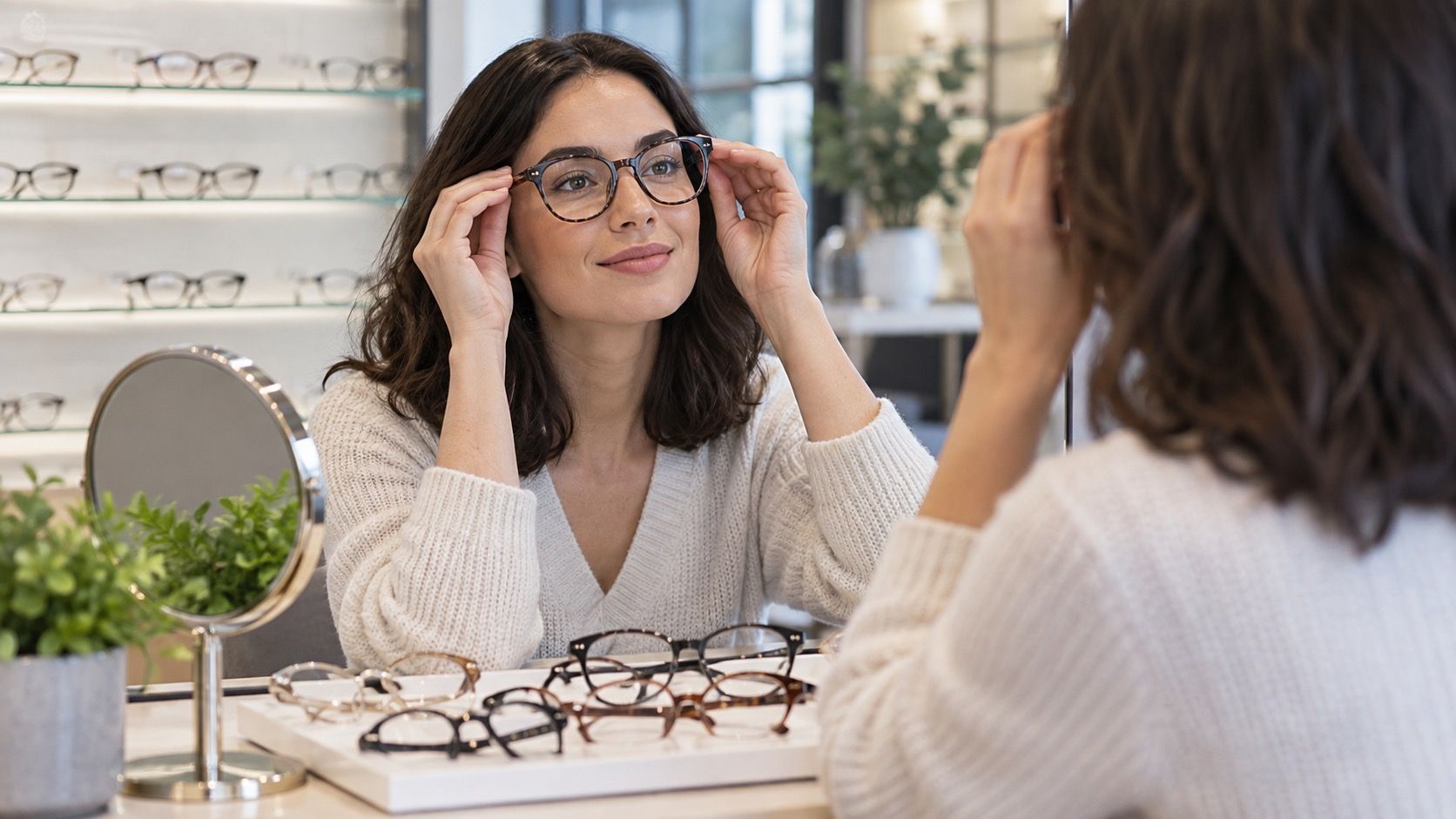
Curved or softly upswept glasses are often suggested for square faces because they contrast with the jawline, but there is no single best frame. Rounded frames can add softness, rectangular frames can create a deliberate graphic look, and cat-eye shapes can draw the eye upward. Fit is the practical priority: check that the bridge is comfortable, the temples do not pinch, and the overall width feels proportionate.
Makeup can highlight or diffuse structure based on your preference. A softly blended contour beneath the cheekbones can add dimension without making the jaw look heavier. Blush placed a little higher and outward can create lift, while a more centered placement gives a fresh, rounded effect. Experiment in daylight; a placement that looks subtle in a bathroom mirror can read differently outdoors.
Earrings and necklines influence the frame around your face as well. Hoops, curved drops, bold studs, open collars, and high necklines all create different balances. Choose them for comfort and style first, then notice the effect as a bonus rather than a rule.
Use face shape as a styling reference
A square-face result is useful when it gives you a clearer starting point. You may notice that your jaw and forehead are similar in width, your face is not much longer than wide, and the lower corners are defined. Those observations can help you compare a new part, haircut, or pair of glasses with more confidence.
They should not narrow your choices. You can emphasize angular features, soften them, or ignore them entirely depending on your mood and style. Face shape changes in appearance with hair, lighting, facial hair, makeup, and expression. Treat the category as a flexible reference, then build the look that feels most natural to you.